
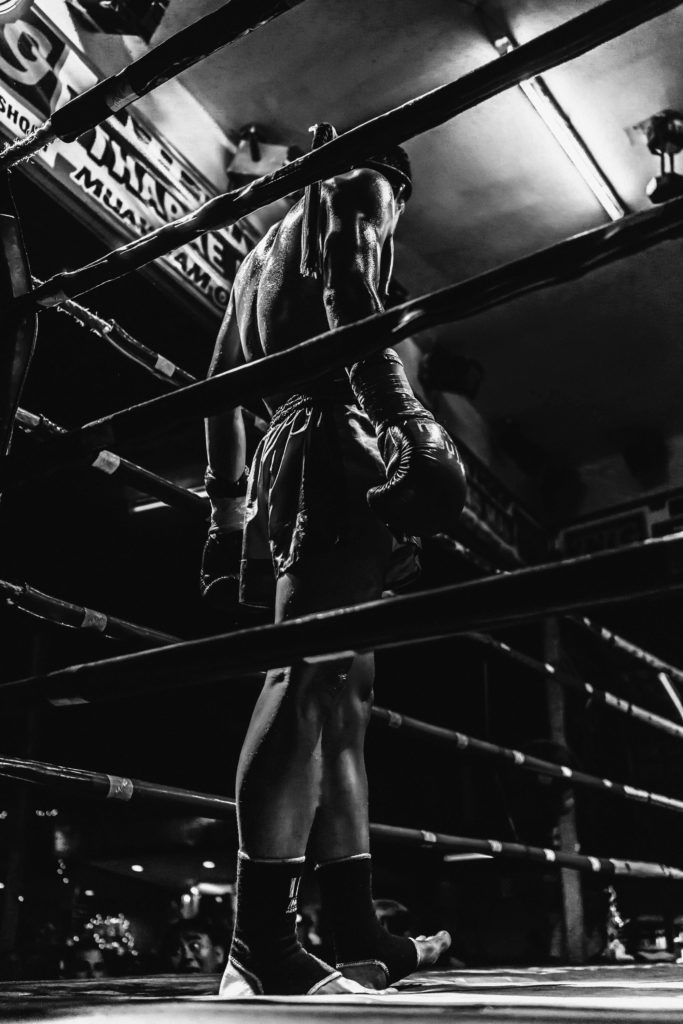
Samart Payakaroon is widely regarded as the greatest Muay Thai fighter in history. A 4-time Lumpinee Stadium champion, WBC World Boxing title holder, national entertainer, and living legend — his career set a standard the sport has never seen equalled. Today he teaches at his own gym in Bangkok, committed to preserving the art of Muay Thai for the next generation.
Personal profile
Samart Payakaroon
Full name
Samart Thipthamai
Ring name
Samart Payakaroon
Date of birth
5 December 1962
Birthplace
Chachoengsao Province, Thailand
Style
Muay Femur (technician)
Record
150+ fights — approx. 90% win rate
Payak Nayoke
The Tiger Who Never Bleeds — he never sustained a facial cut throughout his entire Muay Thai career
The Boxing Computer
A tribute to his extraordinary ring intelligence and ability to calculate an opponent before they could act
The Muhammad Ali of Muay Thai
Recognised worldwide for combining unmatched technical dominance with charisma, artistry and cultural fame
Titles and honours
Championship record
Samart’s championship record across Muay Thai and professional boxing remains one of the most extraordinary in combat sports history. Furthermore, his Fighter of the Year awards confirm the level of dominance he maintained throughout his prime years.
WBC World Super Bantamweight Champion
Stopped former champion Lupe Pintor of Mexico by TKO in the 5th round — only his 12th professional boxing bout
January 1986 · Bangkok, Thailand
Lumpinee Stadium Champion — Pinweight (102 lb)
Won on points against Kongsamut Sor Thanikul
29 February 1980
Lumpinee Stadium Champion — Junior Flyweight (108 lb)
Won on points against Poollap Saknirun
11 November 1980
Lumpinee Stadium Champion — Junior Bantamweight (115 lb)
Won on points against Singthong Prasopchai
31 March 1981
Lumpinee Stadium Champion — Featherweight (126 lb)
Won on points against Samingnoom Sitthiboontham
13 October 1981
Fighter of the Year — Sports Writers Association of Thailand
Awarded twice in recognition of the era-defining dominance of his performances
1981 and 1988
Career story
From Chachoengsao to world champion
1962
Born in Chachoengsao
Samart Thipthamai was born on 5 December 1962 in the village of Klong Khet, Chachoengsao Province, eastern Thailand — the fourth of five siblings in a working-class fishing family. His older brother Kongtoranee, himself a decorated fighter, introduced him to Muay Thai at a young age.
1972–1975
First fights and early training
Samart had his first Muay Thai bout at a temple fair in Chachoengsao under the name Samart Lookkhlongkhet — and won on points. After moving to Pattaya with his brother, he trained at Sing Esso Camp before relocating to Sityodtong Gym in 1975 under the legendary Kru Yodtong Senanan, where his style was refined into something exceptional.
1978
Debut at Lumpinee Stadium
At just 16 years old, Samart began fighting at Lumpinee Stadium — the most prestigious arena in Muay Thai. That year alone he notched over 10 fights. Despite an early losing streak in 1979, he responded with the resilience and determination that would come to define his career.
1980–1981
Four Lumpinee championships
In a stunning 20-month period, Samart captured the Lumpinee Stadium belt in four separate weight divisions — from Pinweight to Featherweight. As a result, he became one of the most celebrated fighters in the stadium’s history and earned the undying respect of the Thai boxing world.
1986
WBC World Boxing Champion
Samart crossed over to professional Western boxing and, in only his twelfth bout, stopped former WBC champion Lupe Pintor in the 5th round to claim the WBC World Super Bantamweight title. It remains one of the most remarkable achievements in Thai sporting history — a world title in two completely different combat sports.
Late 1980s onwards
Cultural icon — music, film and entertainment
Beyond the ring, Samart became one of Thailand’s most beloved entertainers. He released seven commercially successful song albums and appeared in major Thai and international film productions including The Legend of Suriyothai, Fureur, The Bodyguard, Dynamite Warrior, and Muay Thai Chaiya. In every arena he entered, he succeeded.
Today
Preserving Muay Thai for the next generation
Samart Payakaroon now dedicates himself to nurturing the next generation of fighters, spreading awareness of Muay Thai as both a competitive sport and a cultural heritage, and preserving the traditional art so its values and beauty are not lost to time. At his gym in Sai Mai, Bangkok, he continues to teach personally — passing on not just technique, but the spirit of the art he gave his life to.
Common questions
About Samart Payakaroon
Is Samart Payakaroon the greatest Muay Thai fighter of all time?
Samart Payakaroon is consistently named the greatest Muay Thai fighter of all time by fighters, trainers, historians, and fans worldwide. His combination of four Lumpinee Stadium titles across weight divisions, a WBC world boxing championship, an uncut face across over 150 fights, and a technical style so precise he was dubbed The Boxing Computer sets him apart from every other fighter in the sport’s history.
How many Lumpinee Stadium titles did Samart Payakaroon win?
Samart Payakaroon won four Lumpinee Stadium championships across four separate weight divisions — Pinweight in 1980, Junior Flyweight in 1980, Junior Bantamweight in 1981, and Featherweight in 1981. This achievement across four weight classes within roughly two years remains one of the most extraordinary records in the history of Muay Thai.
How did Samart Payakaroon win the WBC World Championship?
In January 1986, in only his twelfth professional boxing bout, Samart Payakaroon stopped former WBC champion Lupe Pintor of Mexico by TKO in the fifth round in Bangkok. The victory made him one of the very few athletes in history to hold world titles in both Muay Thai and professional boxing.
What is Samart Payakaroon doing today?
Today, Samart Payakaroon runs his official Muay Thai gym in Sai Mai, Bangkok. He is committed to training the next generation of fighters, preserving the traditional art of Muay Thai, and spreading awareness of the sport as both a cultural heritage and a competitive discipline. He continues to teach privately at the gym by advance reservation.
Where was Samart Payakaroon born?
Samart Payakaroon was born Samart Thipthamai on 5 December 1962 in the village of Klong Khet, Chachoengsao Province, eastern Thailand.
Train with the legend
Private sessions with Samart Payakaroon are available at his gym in Bangkok by advance reservation.